



Hands at a laptop with an LMS learning platform hologram

AI Platform Engineering

AI for Learning

AI inside the learning platform your learners already use.

We engineer AI into the learning platform, LMS or course marketplace you already run: a tutor that teaches from your own course material and shows its sources, learning paths that adjust to each learner, and quizzes and grading suggestions your teachers review first.

Inside your platform, under your control

Each feature is wired into the courses, gradebook and learner records you already keep, and every release is tested against your own cases before a learner sees it.

explain photosynthesis simply, I have a test tomorrow

  • A woman at a monitor reviewing an app interface design

    How plants make food

    Lesson in your course

  • Hands holding a phone with floating app screens around it

    The light reactions

    Video with transcript

  • Hands at a laptop with LMS course icons above the keys

    Practice quiz

    Hints, not answers

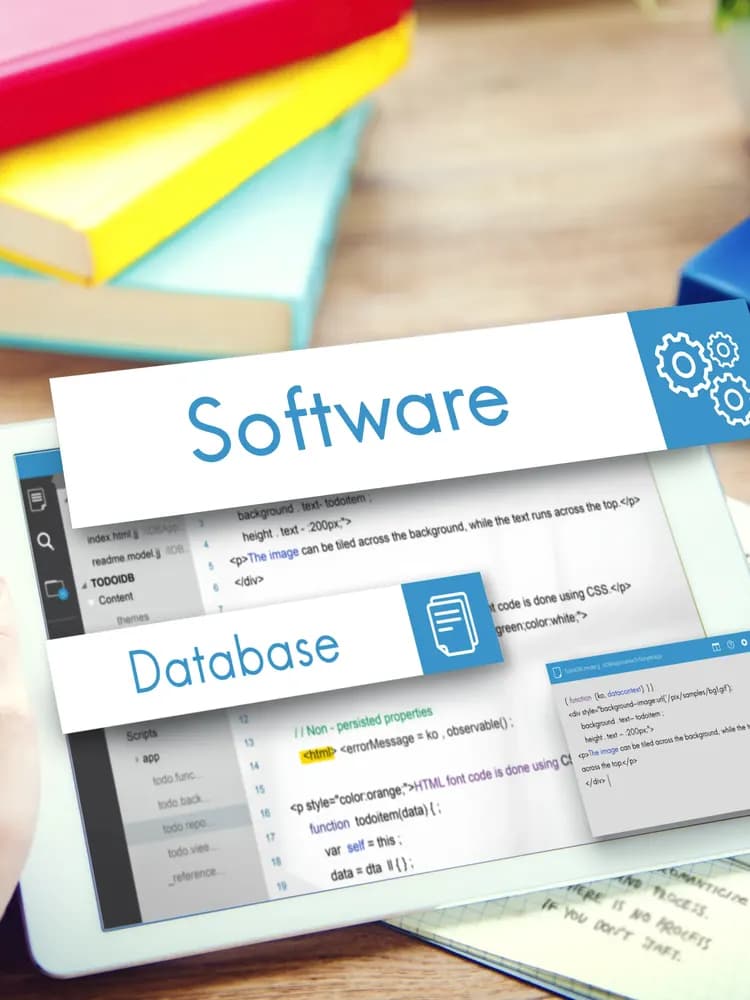
  • A tablet showing a software and database course beside a stack of books

    Revision notes

    Shared by your teacher

Search across your courses

A learner's question finds the right lesson, video, practice set or teacher's note across the courses they are enrolled in.


  • TutorI can't answer graded questions, but let's work it out. What does a leaf need first?
  • LearnerCan you just tell me the answer to question four?
  • TutorPlants use light to turn water and carbon dioxide into sugar. See lesson two.

A tutor that teaches

Answers from the course's own material with the source shown, and guides learners through graded work instead of doing it.

Quiz: How plants make food

Which part of a leaf cell captures light energy? Answer: the chloroplast. Source: lesson two.

Quizzes your teachers approve

Questions are drafted from a course unit with the answer and its source, and wait for a teacher before learners see them.

  1. Release 12Live
  2. Release 13Passed
  3. Release 14Held back
  4. Release 15Testing

Every release tested first

Tutor, search and grading changes are checked against your own questions and marked work before learners see them, and the last good release is one step back.

What we engineer into a learning platform

The pieces we build most often. Each one connects to your courses, gradebook and learner records, and each one is judged on your own material.

  • Course tutor

    A tutor that answers from your lessons, readings and videos, shows the passage it used and declines what the course does not cover. On graded work it gives hints and questions, never the finished answer.

  • Adaptive learning paths

    Paths that adjust to what each learner has shown they know: what to revisit, what to skip and what comes next, built on your own course structure, with rules your teachers can read and override.

  • Question and assessment generation

    Practice questions, quizzes and assessment items drafted from a course unit, each tagged to its learning objective and its source, with wrong options checked for clarity. A teacher approves every item before learners see it.

  • Rubric-based grading suggestions

    Feedback and a suggested mark for essays, short answers and code, scored against your rubric with the evidence quoted. The teacher reads, adjusts and decides; nothing reaches the gradebook without them.

  • Course authoring help

    Outlines, lesson drafts, summaries and worked examples produced from your source material and checked against your style guide, so instructional designers start from a draft rather than a blank page.

  • Translation and localisation

    Courses, captions and assessments translated with your glossary of subject terms kept intact, then reviewed by a fluent person before each language is released to learners.

  • Spoken practice and read-aloud

    Speaking practice with feedback on pronunciation and fluency, and natural read-aloud for lessons and texts, so learners can listen, repeat and practise out loud wherever they study.

  • Early help for learners falling behind

    Early signs that a learner is struggling, drawn from missed work, quiz results and activity, sent to a named teacher or mentor with the reasons shown. A person decides what happens next.

  • Search across course content

    Keyword and semantic search over lessons, videos, transcripts and discussion threads, so a learner's question finds the right moment in the right course, filtered to what they are enrolled in.

A man interacting with an AI hologram

Agentic learning

When the learner brings an AI agent

Many learners now study alongside general-purpose AI assistants, and some use agents that act for them. A learning platform has to decide what those agents may read, what they may do and what stays closed to them.

We give agents a governed way in: an MCP server over courses, schedules and progress with the access a learner grants, rules that keep graded assessments and exams closed to agents, and records that show which work an agent touched.

How we build AI agents

From one feature to a platform

Most platforms start with one feature in one course. We build it inside your stack, prove it on your material and hand it to your team.

  1. 01

    Scope

    A short readiness sprint in your courses, learner data and support requests to choose the first feature and agree how it will be judged, with your teachers in the room.

  2. 02

    Build

    Engineers work in your repositories and your cloud, wiring the feature into the course content, gradebook and learner records your platform already keeps.

  3. 03

    Prove

    We test on your own questions and marked work before launch, then release to one course or cohort and watch the measures you chose, with a rollback ready.

  4. 04

    Hand over

    Runbooks, dashboards and a trained team. You own the code, the prompts and the evaluation set; we can stay on to run it if you want.

Frequently asked questions

Do we have to change our LMS to add AI?

No. We build on the platform you run, whether that is an open-source LMS, a hosted one or a platform you built yourselves, through its APIs and in your own cloud. Each feature ships as a service your platform calls.

How do you stop the tutor from doing learners' work for them?

The tutor knows which activities are graded, and on those it switches to hints, questions and worked examples on similar problems. Teachers set the rules for each course, and the tutor's replies are kept so they can be reviewed if a question comes up.

How do you stop the tutor from making things up?

It answers only from your course material, shows the passage it used, declines what it cannot ground and hands over to a teacher on topics you set. Every release is tested against your own question set before learners see it.

Will AI grade our learners' work?

No. It suggests feedback and a mark against your rubric, with the evidence quoted, and a teacher reads, changes and decides. Nothing reaches the gradebook or the learner until a person has approved it.

Who owns the models, prompts and learner data?

You do. The code, prompts, evaluation sets and any fine-tuned weights are yours, in your repositories and your cloud, and learner data stays where your policies say it must. We build on open or hosted base models you approve.

Can you work alongside our in-house team?

Yes. Most engagements pair our engineers with yours, inside your repositories and stand-ups, and end with your team running what we built. Forward-deployed engineering is the model for that.
A hand touching a 'skills' icon on a screen of glowing cards

Tell us about your platform

Tell us the platform you run and the feature you have in mind, and we will come back with a first view of how we would build it.

  1. 01The platform you run, and the systems around it
  2. 02The learners you serve and the feature you have in mind
  3. 03How you would judge it working