


 01
01Supremacy RAG Engineering
Answers grounded in your own data
We build retrieval pipelines that survive a real corpus — layout-aware ingestion, semantic chunking, hybrid search, reranking, and continuous evaluation — so every answer is traceable to the document it came from.
Built for teams whose answers have to be right the first time
01Overview
RetrievalNaive pipelines miss the right passage on a large share of real queries, and the model answers anyway — confidently, and wrong. We engineer the retrieval half properly, because generation can only ever be as good as what reaches it.
01/ 02
Retrieval
Retrieval is where RAG succeeds or fails
Naive pipelines miss the right passage on a large share of real queries, and the model answers anyway — confidently, and wrong. We engineer the retrieval half properly, because generation can only ever be as good as what reaches it.
- 01
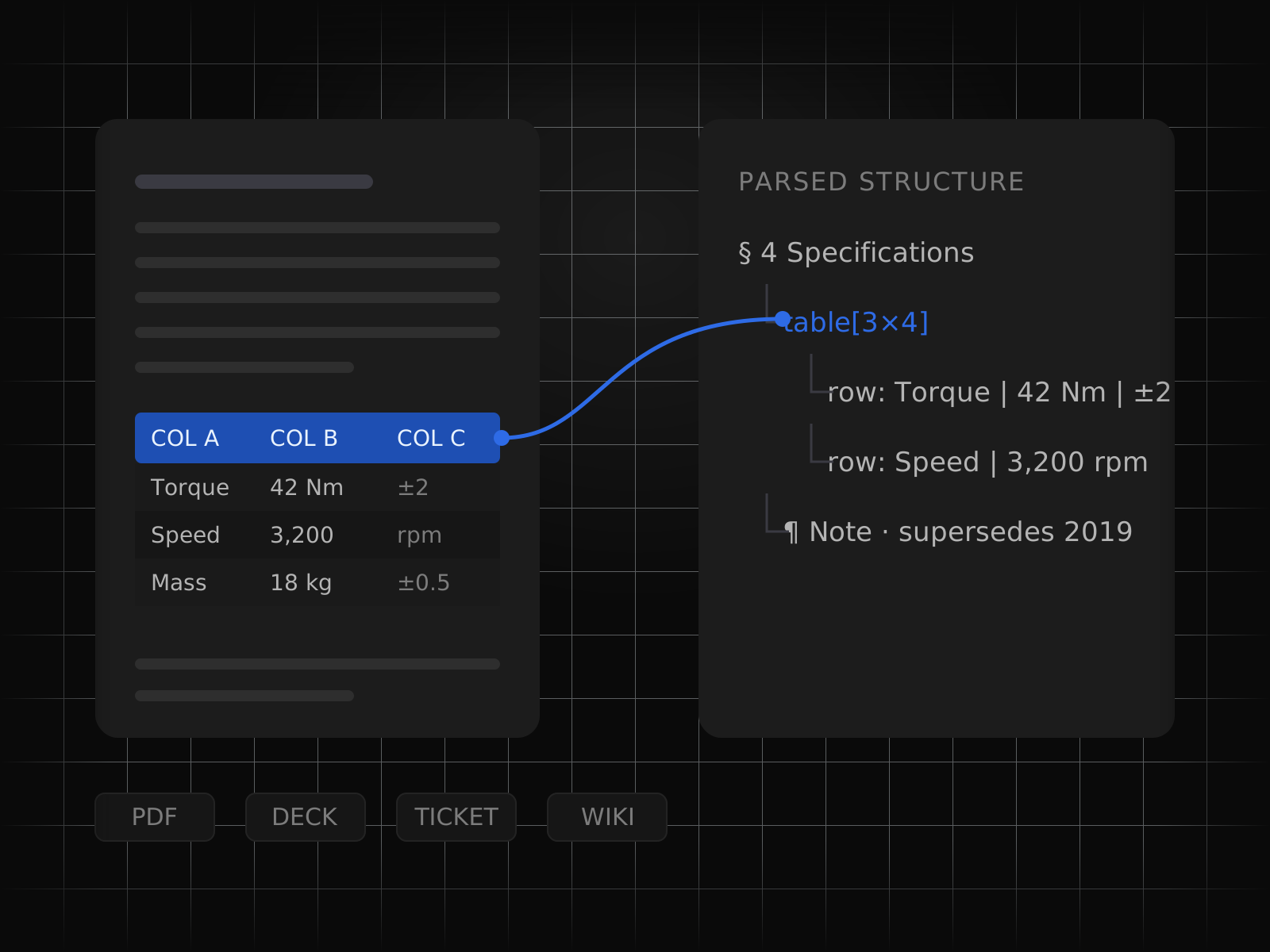
Ingestion that respects the document
Layout-aware parsing keeps tables, headings, and hierarchy intact through PDFs, decks, tickets, and wikis, so meaning survives the trip into the index.
- 02
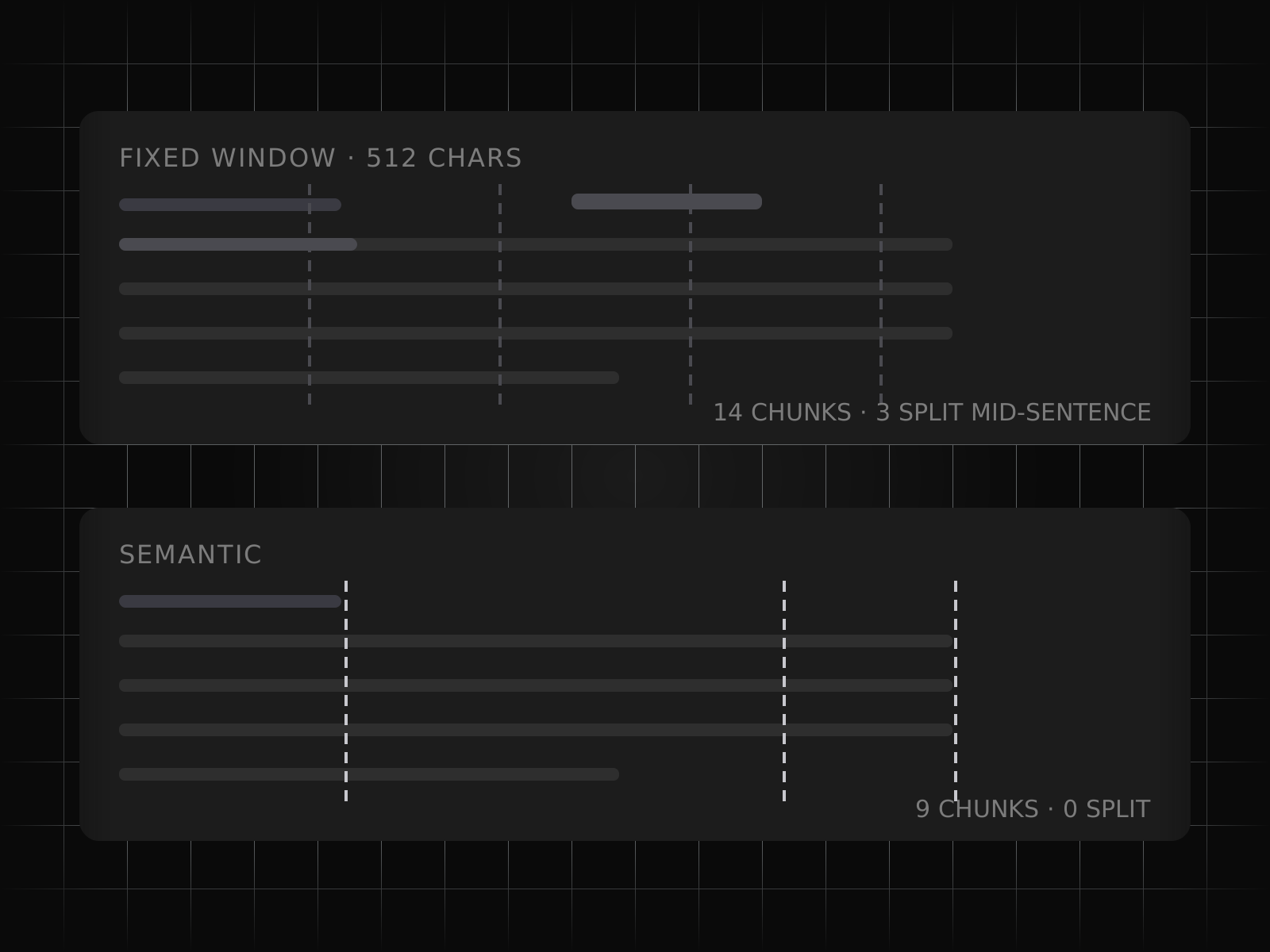
Semantic chunking over fixed windows
Chunks follow the document’s own boundaries rather than a character count — in most corpora this is the single largest lever on retrieval accuracy.
- 03
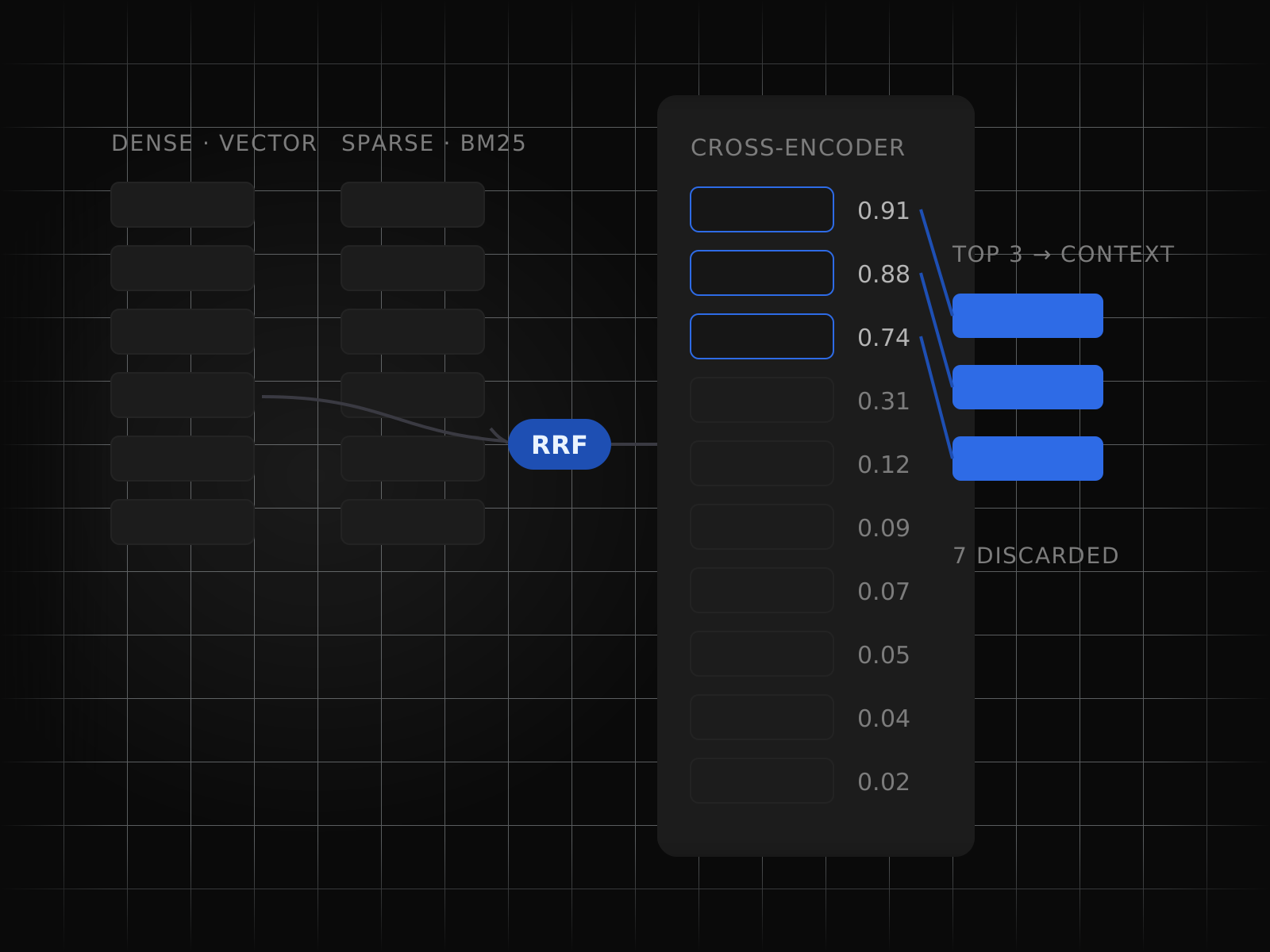
Hybrid search, then rerank
Dense vector search and BM25 run in parallel and fuse with reciprocal rank fusion; a cross-encoder reranker then cuts a wide candidate set down to the few passages worth spending context on.
- 04
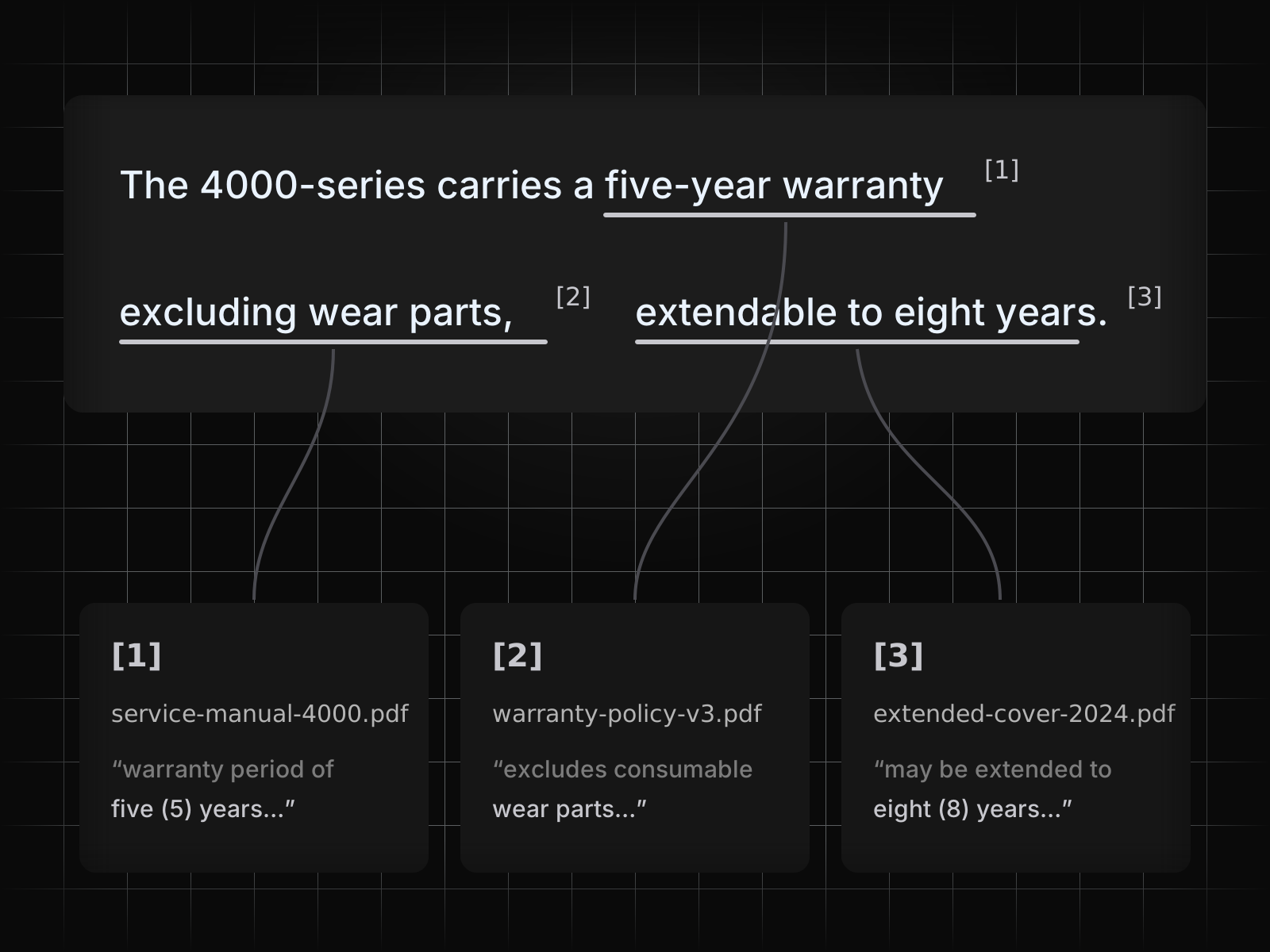
Citations by construction
Every generated claim carries the passage and source it came from, so a reviewer can check the answer instead of being asked to trust it.
02/ 02
Operations
Corpora move, and pipelines drift with them
Retrieval that worked at launch degrades quietly as documents are added, edited, and retired. The difference between a demo and a system is whether anybody finds out before a user does.
- 05
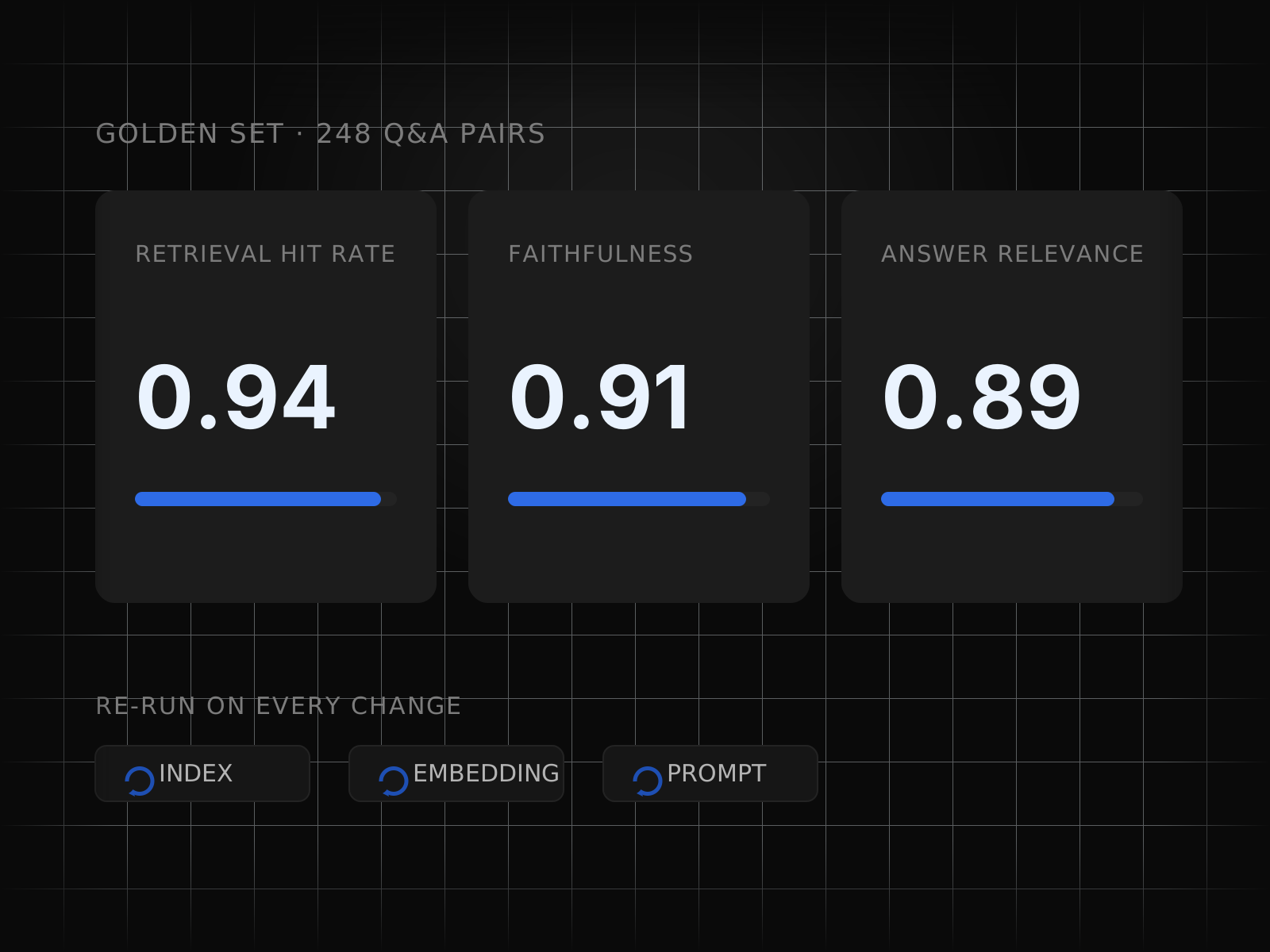
Evaluation on a golden set
Question-and-answer pairs drawn from your own corpus score retrieval hit rate, faithfulness, and answer relevance on every index, embedding, or prompt change.
- 06
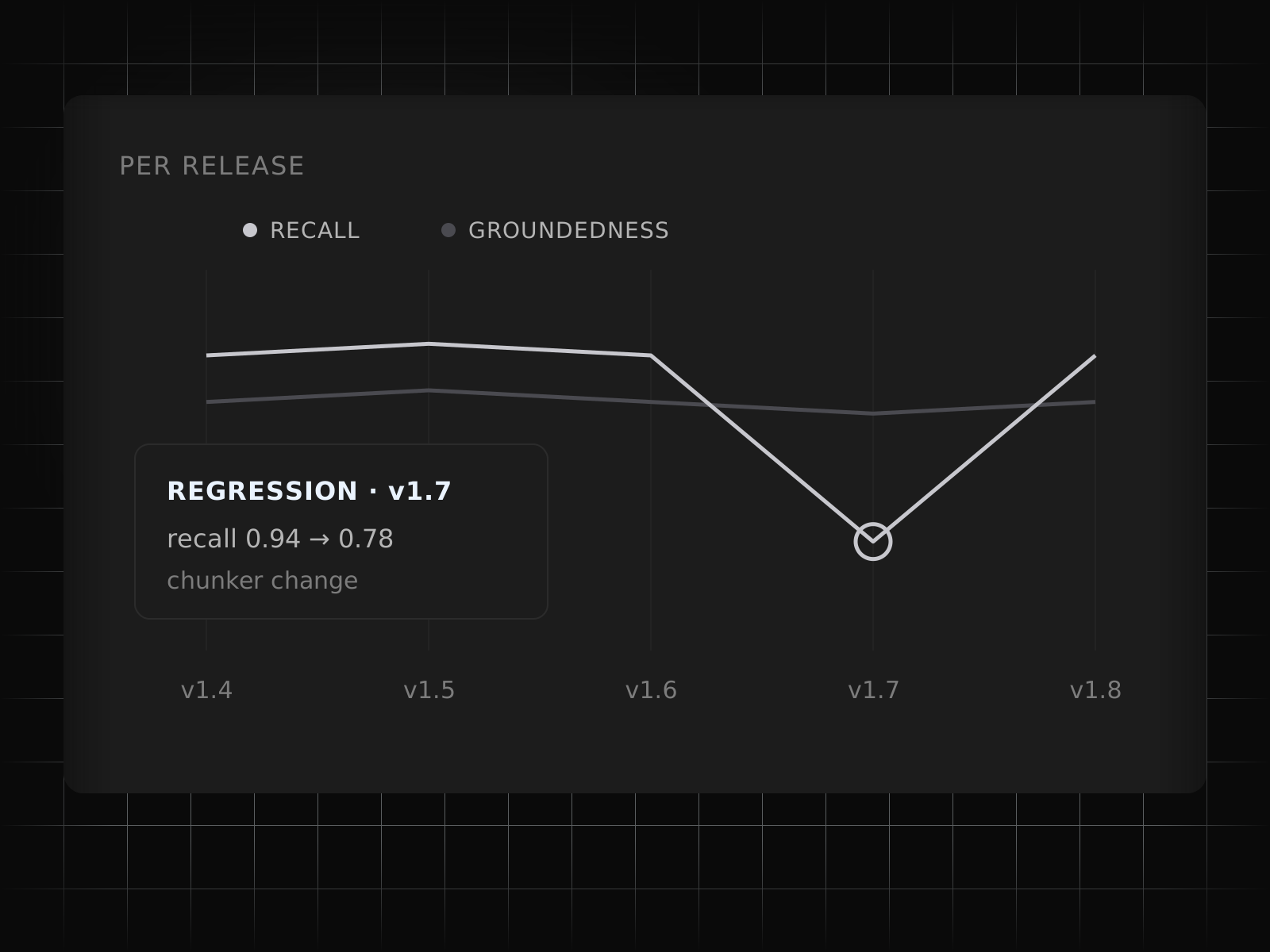
Drift caught in the pipeline
Recall and groundedness are tracked per release, so a regression in chunking or a shift in the corpus shows up as a number rather than a support ticket.
- 07
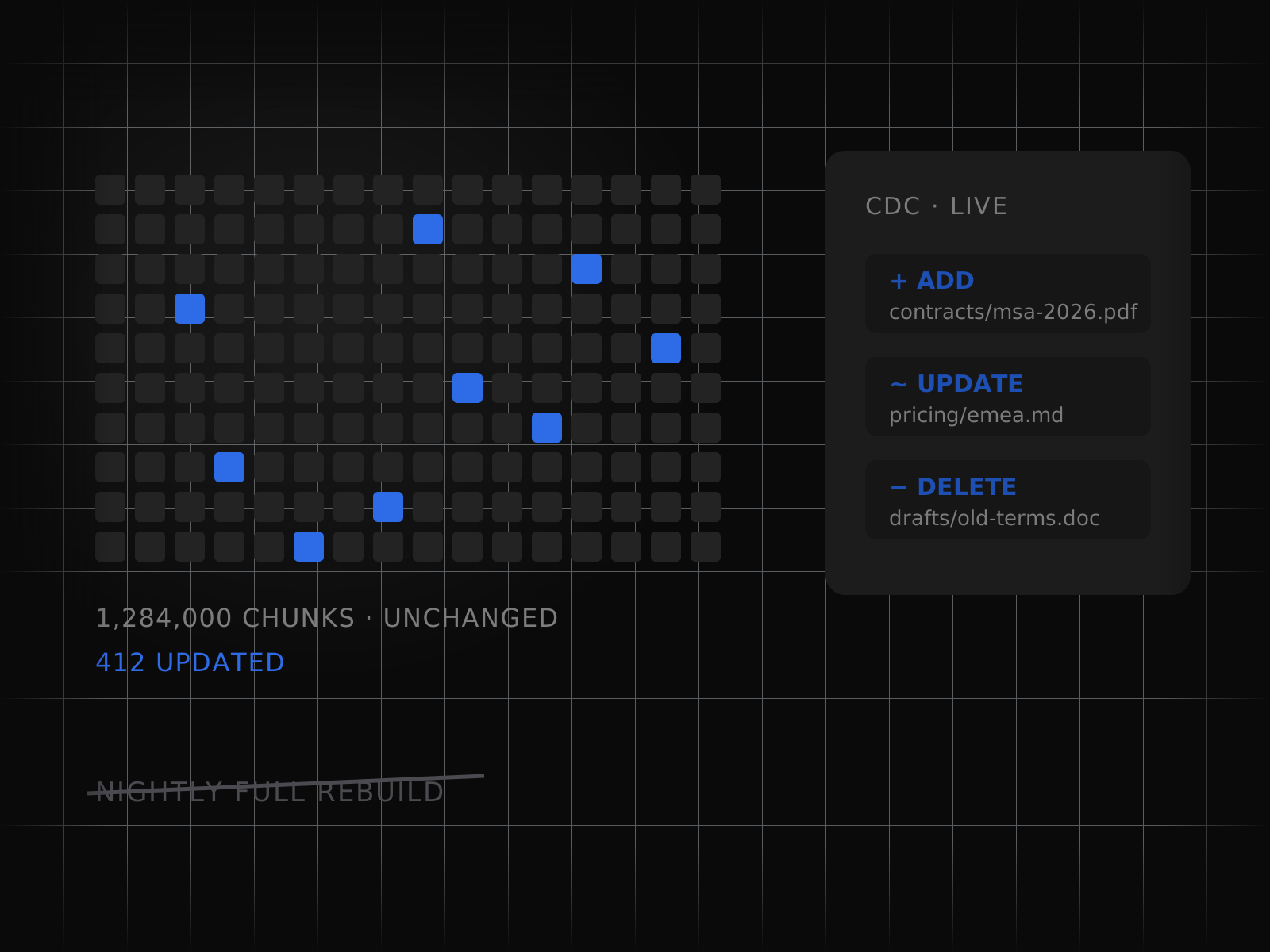
Freshness without full reindexing
Incremental ingestion and change-data capture keep the index current as source systems move, with no nightly rebuild of everything you own.
- 08
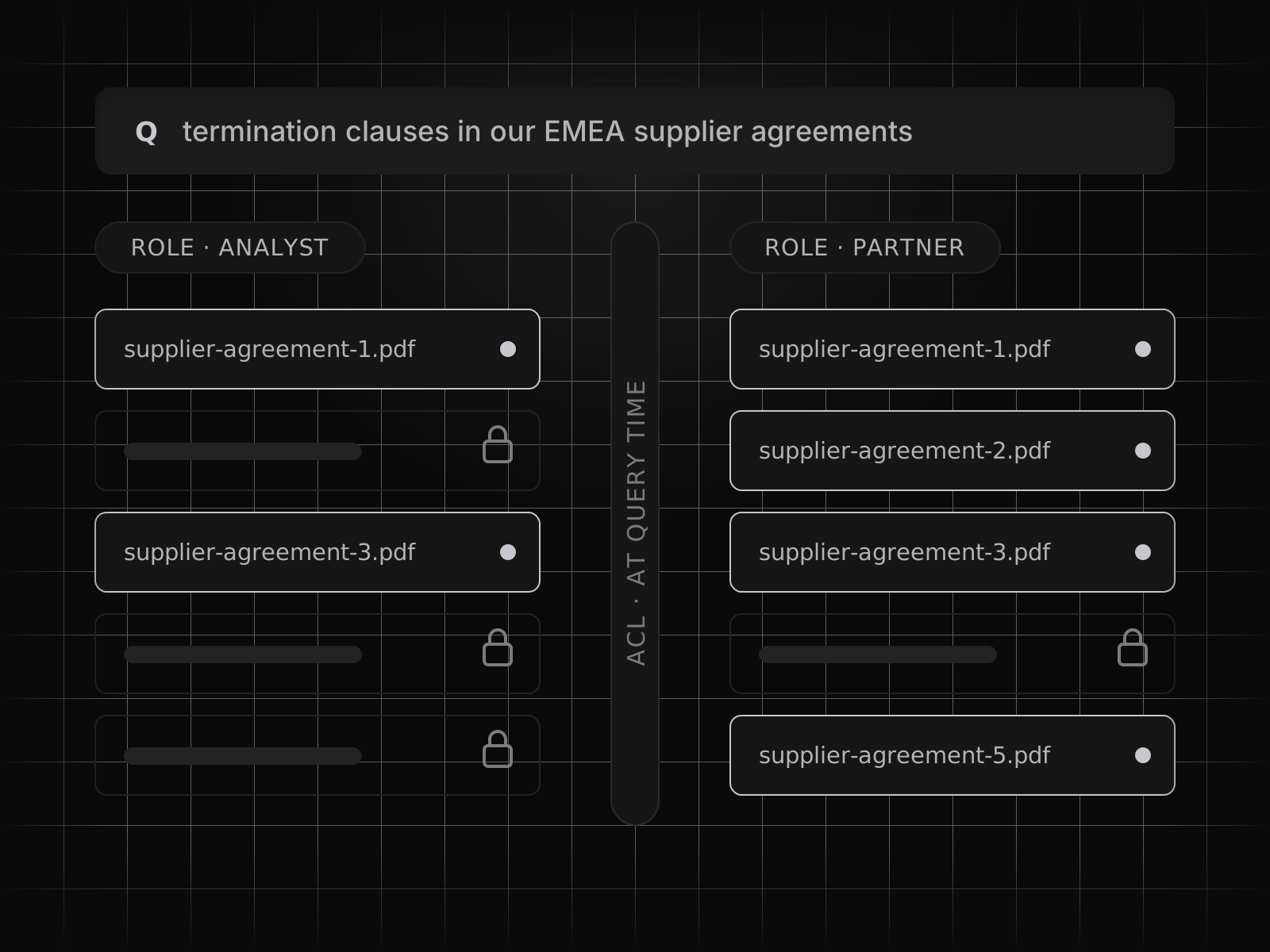
Permissions carried through retrieval
Document-level access control is enforced at query time, so a user can only ever retrieve what they were already entitled to read.
At a glance
Every capability, at a glance
8 figures, one per capability. Open any to read it in full.
How it runs
From first call to running unattended
Every engagement runs the same five steps, whatever the service.
- 01
Map the process
We sit with the people who do the work today and write down every step, exception and hand-off before anything is built.
- 02
Build against a golden set
A held-out set of real cases, agreed with you, is the bar each build has to clear before it goes anywhere near production.
- 03
Run beside the team
The system runs in parallel with the team for as long as it takes, and every disagreement between them is reviewed together.
- 04
Hand over the keys
The code, the prompts, the evaluation set and the runbooks are handed over in your accounts, under your keys.
- 05
Keep it running
We watch the runs, retrain and repair as the inputs drift, or train your own team to do the same.
Outcomes
What this looks like when it lands.
01 Thirty years of engineering documents, finally searchable
Layout-aware ingestion pulled tables and annotations out of scanned specifications, and hybrid retrieval with reranking put the right drawing in front of engineers in seconds instead of an afternoon.
02 A support team answers from the manual, with the manual attached
Agents now get a grounded answer and the exact passage behind it, which cut escalations to product specialists and gave quality assurance something concrete to review.
03 Retrieval that respects who is allowed to see what
A professional services firm exposed its whole matter archive to search while enforcing document-level permissions at query time, so confidentiality walls held without maintaining a second index.

Details
On the spec sheet.
- Service
- RAG Pipelines
- Group
- Models & intelligence
- Capabilities
- 8
- Engagement
- Map, build, run beside the team, hand over, keep running
- Ownership
- Your accounts, your keys, your region
- Also see
- Document Intelligence, LLM Training & Fine-Tuning, AI Agents & Agentic Automation, AI Evaluation, Safety & Security
- Case studies
- Maintenance: alarms and notes to planned work
FAQs
Asked before signing.
How is this different from pointing a chatbot at our files?
An off-the-shelf tool gives you one retrieval strategy and no way to see when it misses. We build ingestion, chunking, hybrid retrieval, reranking, and an evaluation harness against your corpus, so accuracy is a measured number you can improve rather than a black box you have to trust.
Which vector stores and models do you use?
Qdrant, pgvector, Pinecone, and Elasticsearch on the storage side, with embedding and reranking models chosen per corpus. Every choice is benchmarked against your own queries rather than assumed from a leaderboard.
Can it respect our permissions model?
Yes. Access control is applied at query time against your identity provider, so retrieval is filtered to what the user can already read. Nothing is surfaced through search that would not be visible in the source system.
What about agentic RAG?
For multi-part questions we let a planner decompose the query, retrieve for each part, and judge whether it has enough context before answering. It costs more per call, so we apply it to the question types that earn it rather than across the board.
How do you prove it is accurate?
We build a golden set from your real questions and score retrieval hit rate, faithfulness, and answer relevance on every change. You get the harness and the numbers, so accuracy is tracked continuously rather than sampled once at launch.