


 01
01Supremacy AI Engineering
Applied AI, built to run in production
Supremacy designs, builds, and operates the whole applied-AI stack — model selection and fine-tuning, retrieval, agents, and the automation that carries the output into the systems your business already runs on.
Built for data, operations, and platform teams putting AI into production
01Overview
FoundationsMost AI programmes stall because every layer belongs to a different team and none of them own the outcome. We build the stack as a single system — models, retrieval, orchestration, and evaluation — so a change anywhere in it is measured against the same bar.
01/ 03
Foundations
One engineering discipline, not six pilots
Most AI programmes stall because every layer belongs to a different team and none of them own the outcome. We build the stack as a single system — models, retrieval, orchestration, and evaluation — so a change anywhere in it is measured against the same bar.
- 01
Model selection you can defend
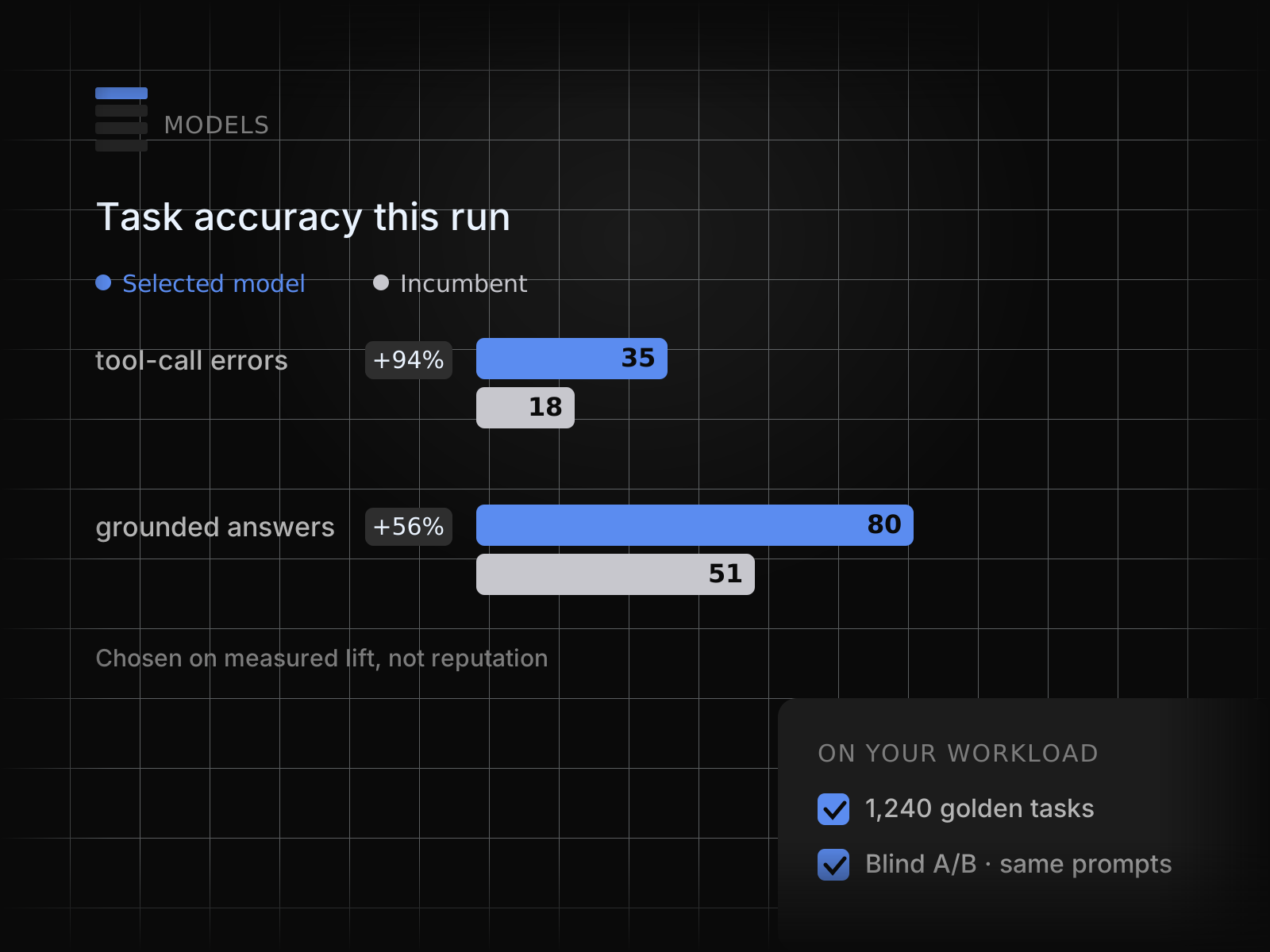
Frontier APIs where reasoning carries the task, open-weight models where cost, latency, or data residency decides it — benchmarked on your workload rather than a public leaderboard.
- 02
Retrieval treated as infrastructure
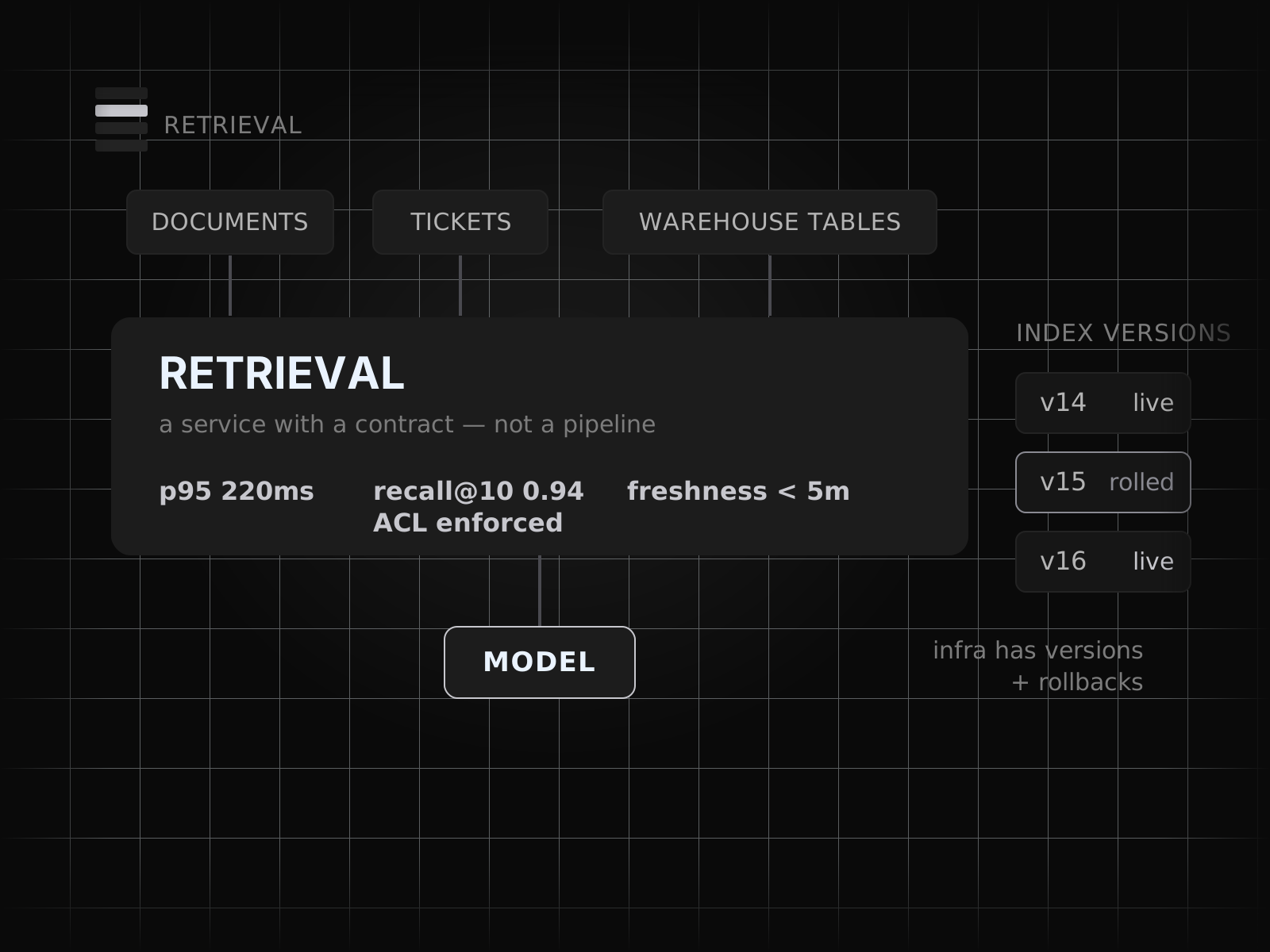
Hybrid search, reranking, and grounded citations turn your documents, tickets, and warehouse tables into context the model can actually be held to.
- 03
Agents with a bounded blast radius
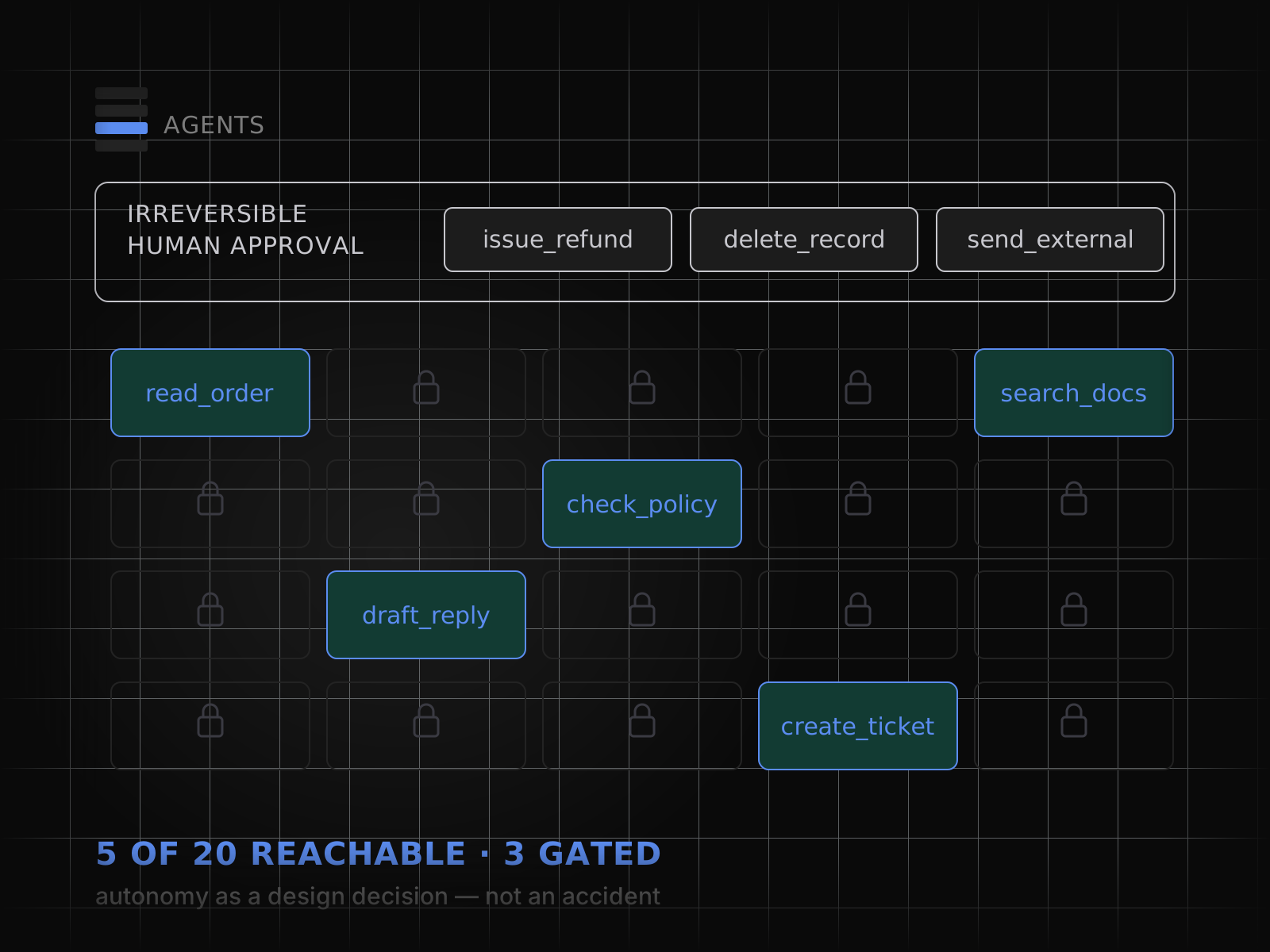
Tool calls run behind typed schemas, scoped permissions, and human approval on anything irreversible, so autonomy is a design decision instead of an accident.
- 04
Evaluation from the first commit
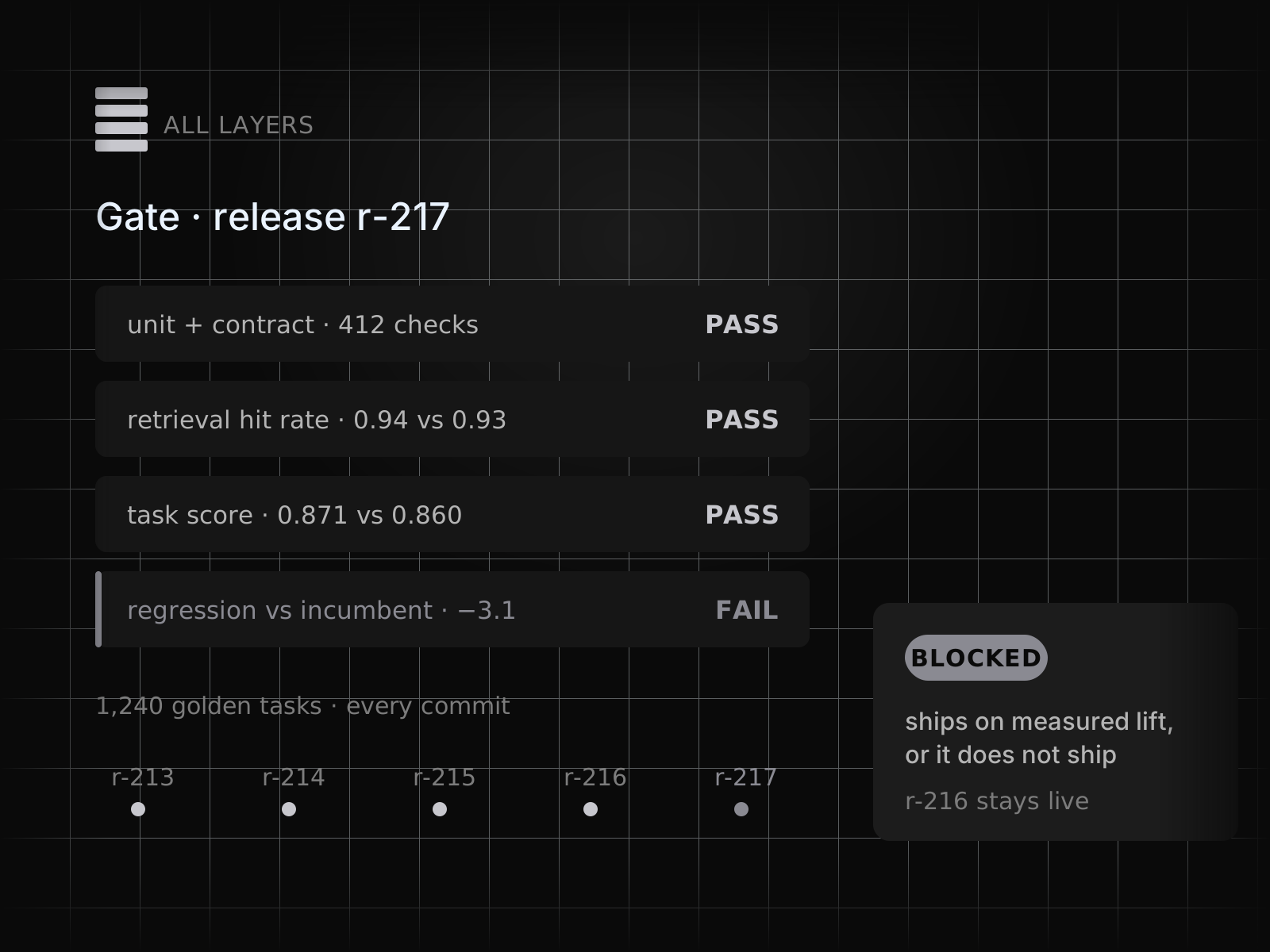
Golden sets, regression suites, and LLM-as-judge scoring gate every prompt, model, and index change before a single user sees it.
02/ 03
Operations
The part most AI programmes skip
Shipping the model is the easy half. What decides whether the system is still trusted six months later is the operational layer around it — telemetry, cost control, guardrails, and a clear answer to who owns it.
- 05
Observability on every call
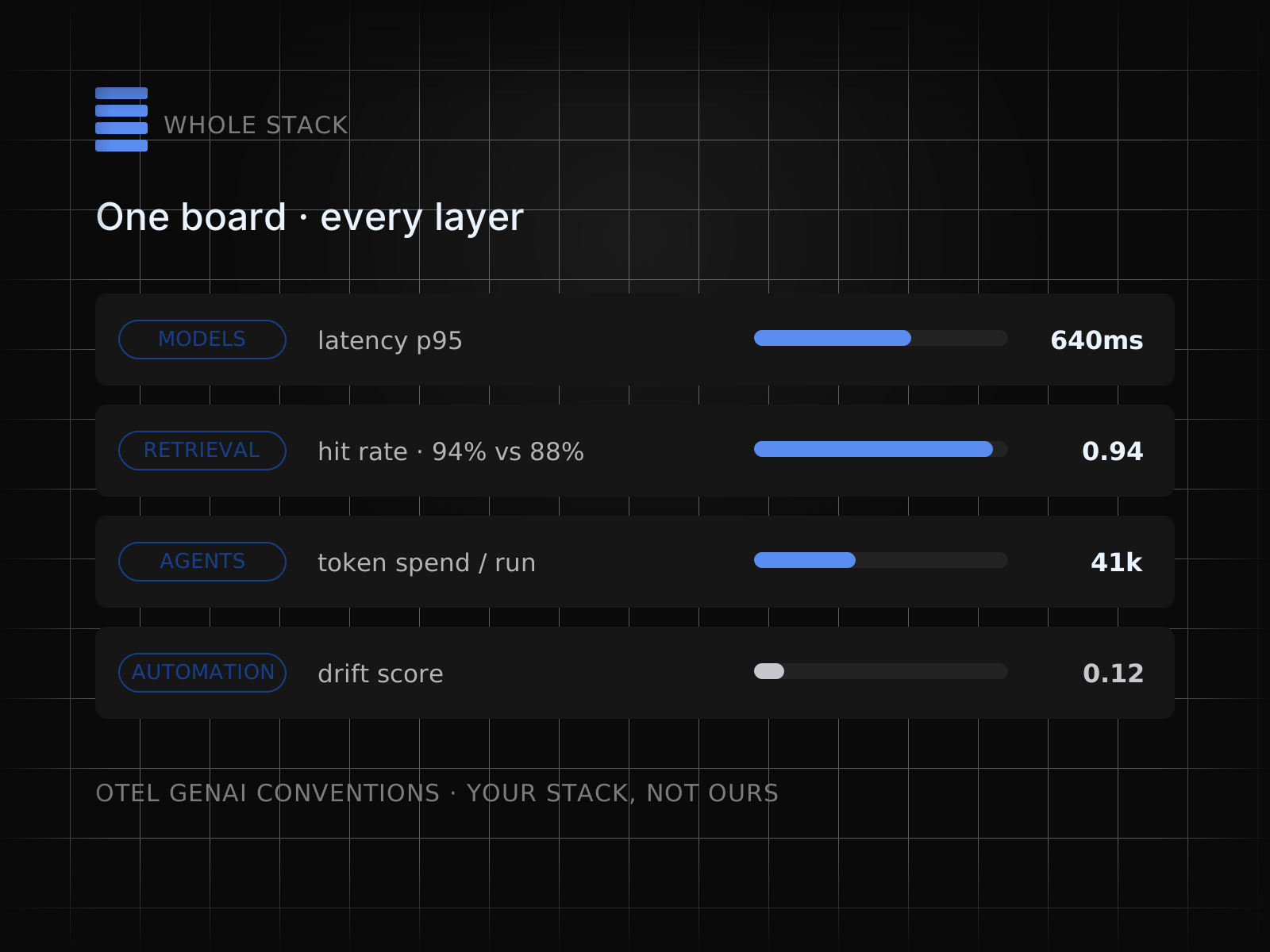
Latency, token spend, retrieval hit rate, tool-call success, and drift land on one dashboard, so the team accountable for the system can see exactly how it is behaving.
- 06
Cost that stays predictable
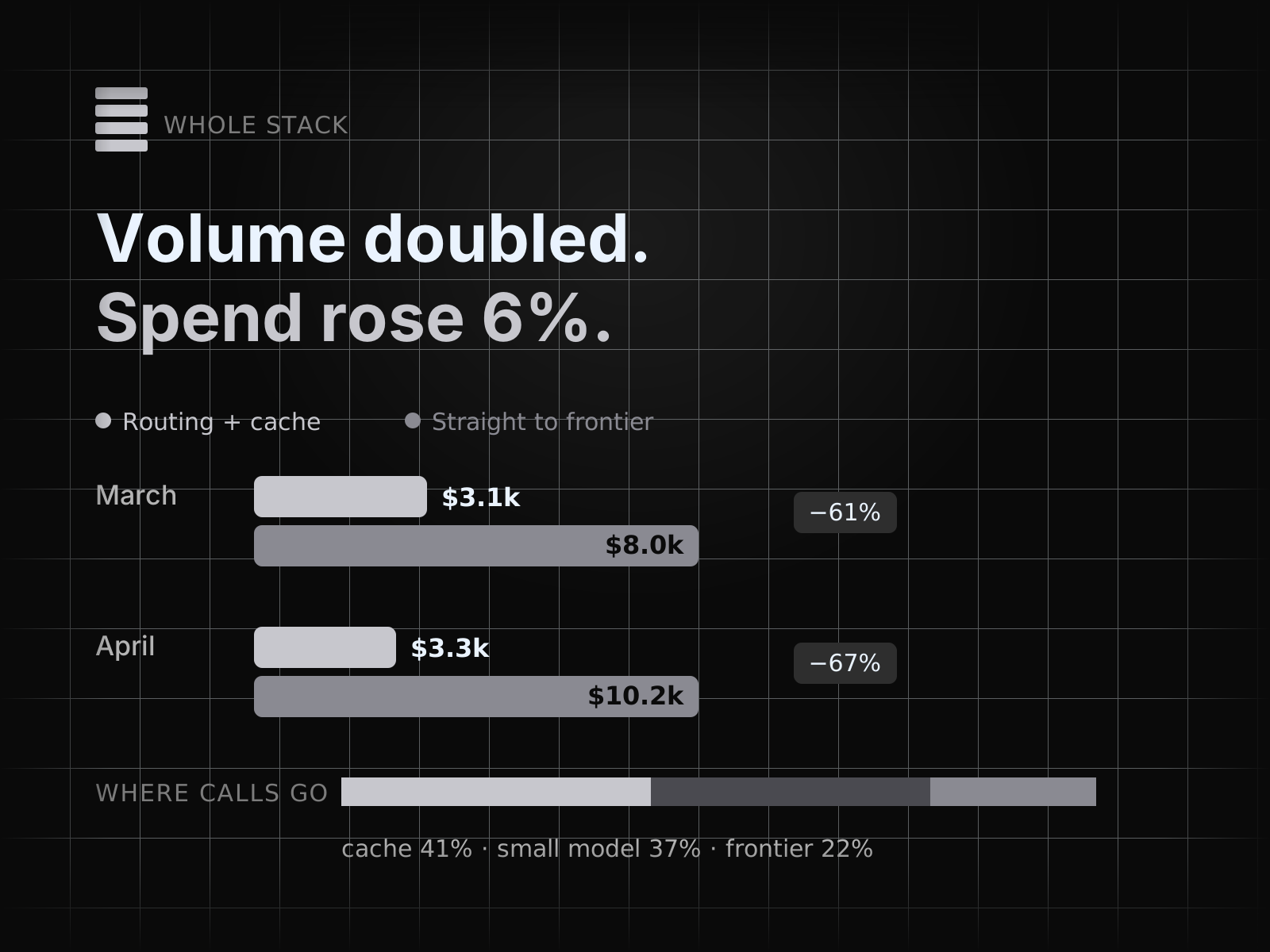
Semantic caching, model routing, and distillation onto smaller models keep unit economics flat as volume grows instead of scaling straight up with it.
- 07
Guardrails at the boundary
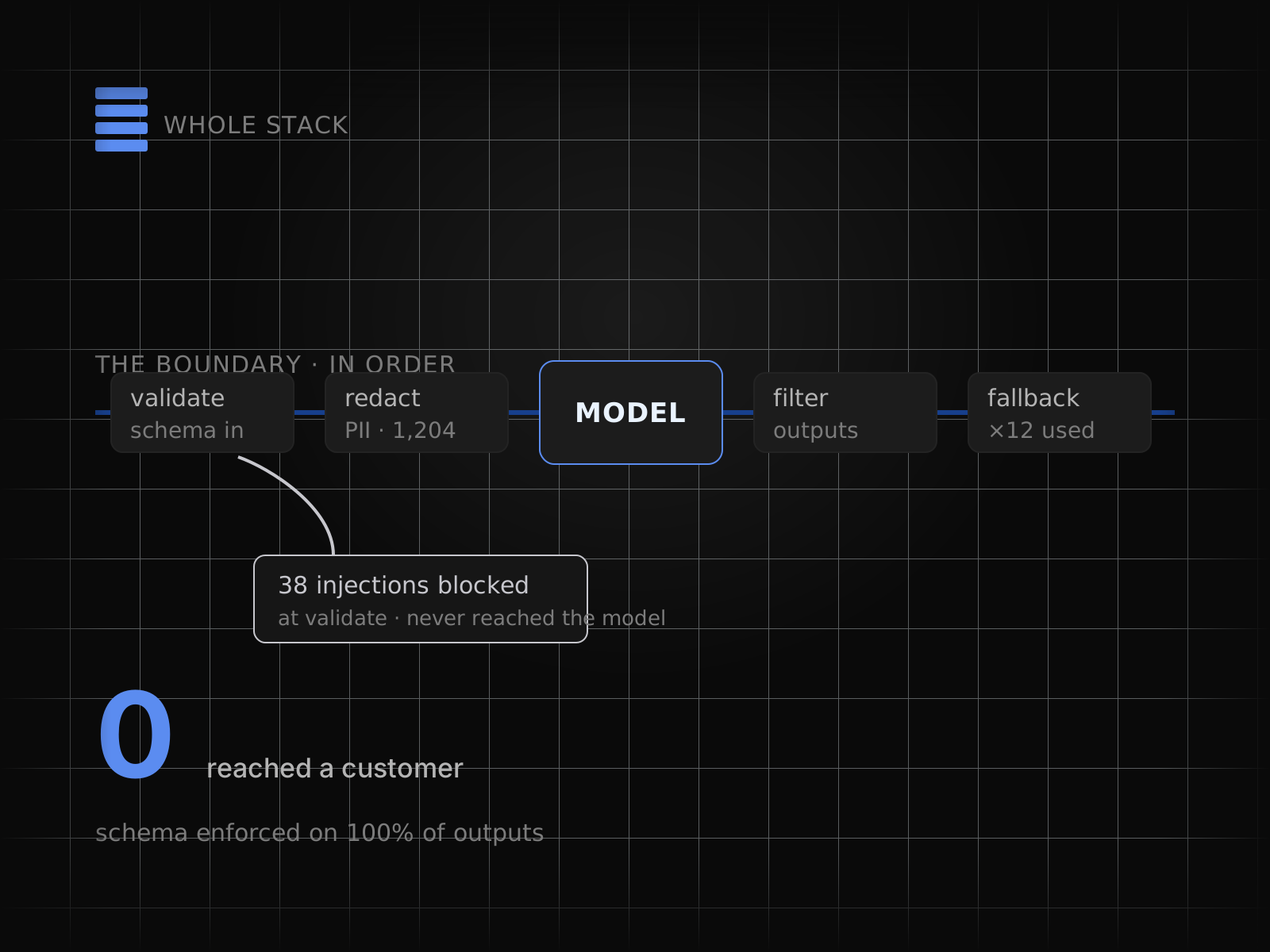
Input validation, PII redaction, output filters, prompt-injection defences, and fallback chains keep failures contained well before they reach a customer.
- 08
Ownership you keep
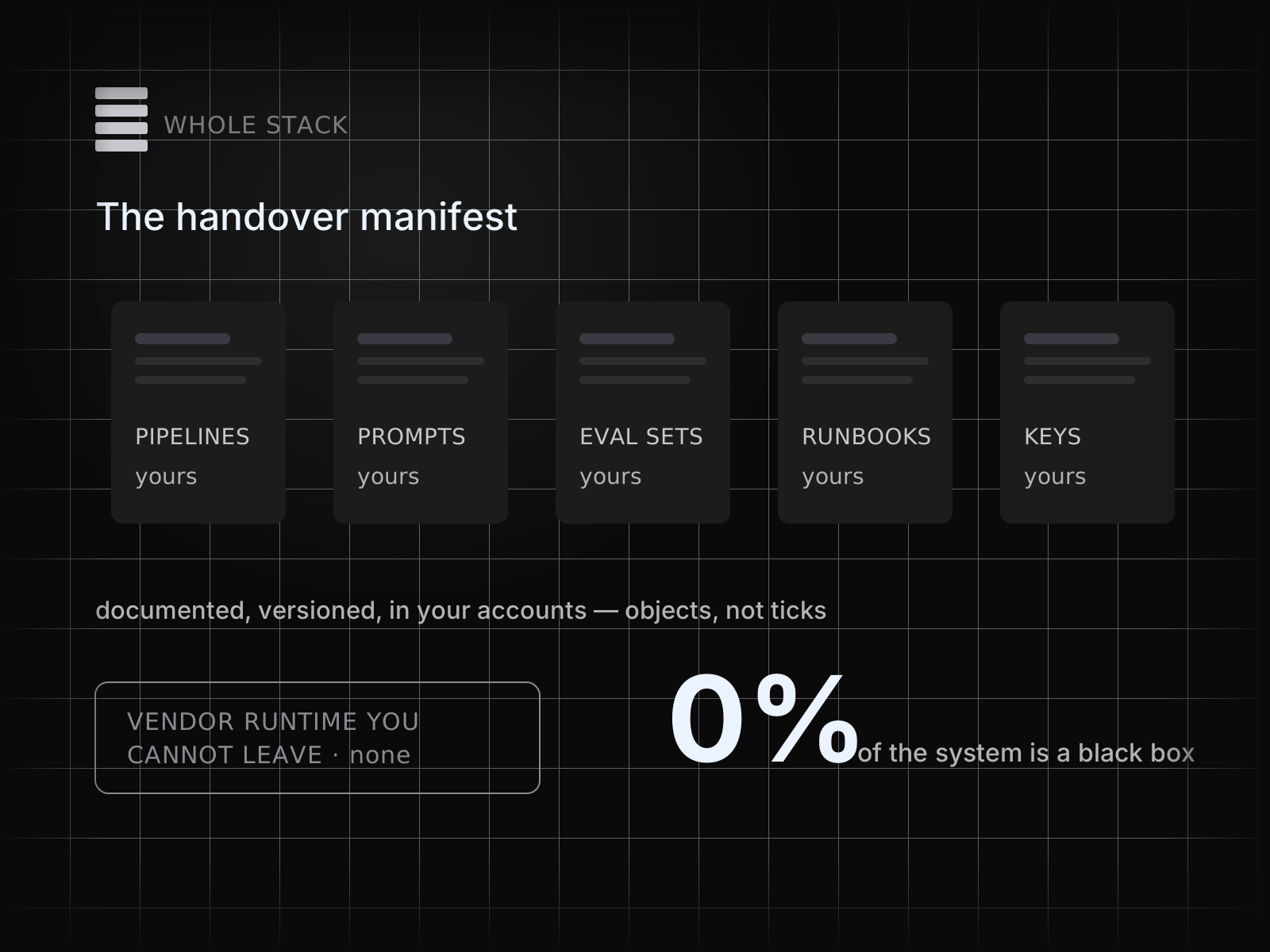
Systems run in your cloud accounts under your keys, with the pipelines, prompts, and evaluation sets documented and handed over. No black box, no runtime you cannot leave.
03/ 03
Assurance
The questions your risk team will ask
Shipping a system that works is not the same as shipping one your organisation is allowed to run. Compliance evidence, jurisdiction, portability, and agent-specific threats are engineering decisions taken during the build, not paperwork assembled afterwards.
- 09
Compliance evidence, not assertions
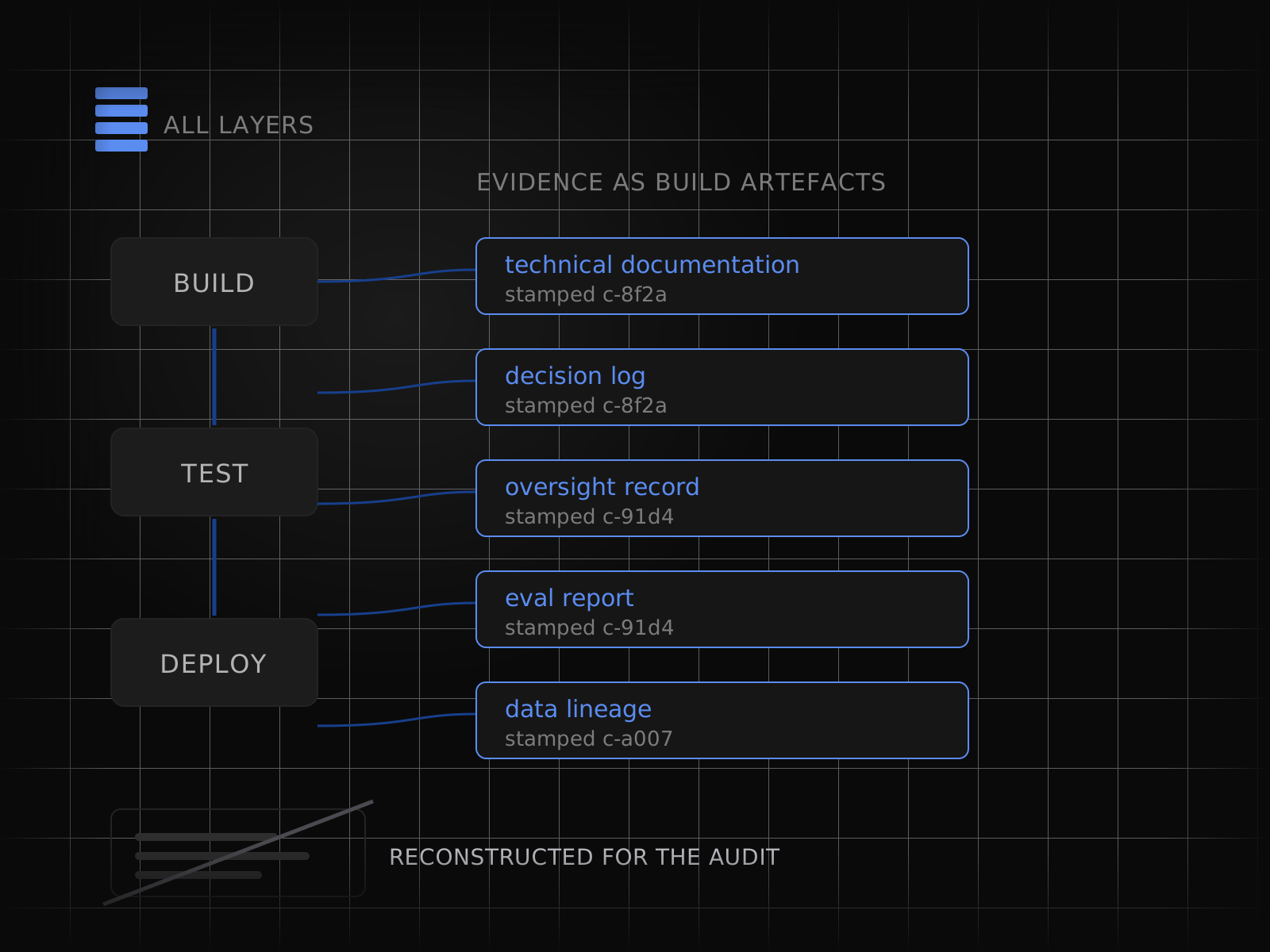
Technical documentation, decision logs, and human-oversight records are produced as build artefacts rather than reconstructed for an audit, so the obligations that apply to your deployment are answered with the system itself.
- 10
Sovereignty at inference, not just storage
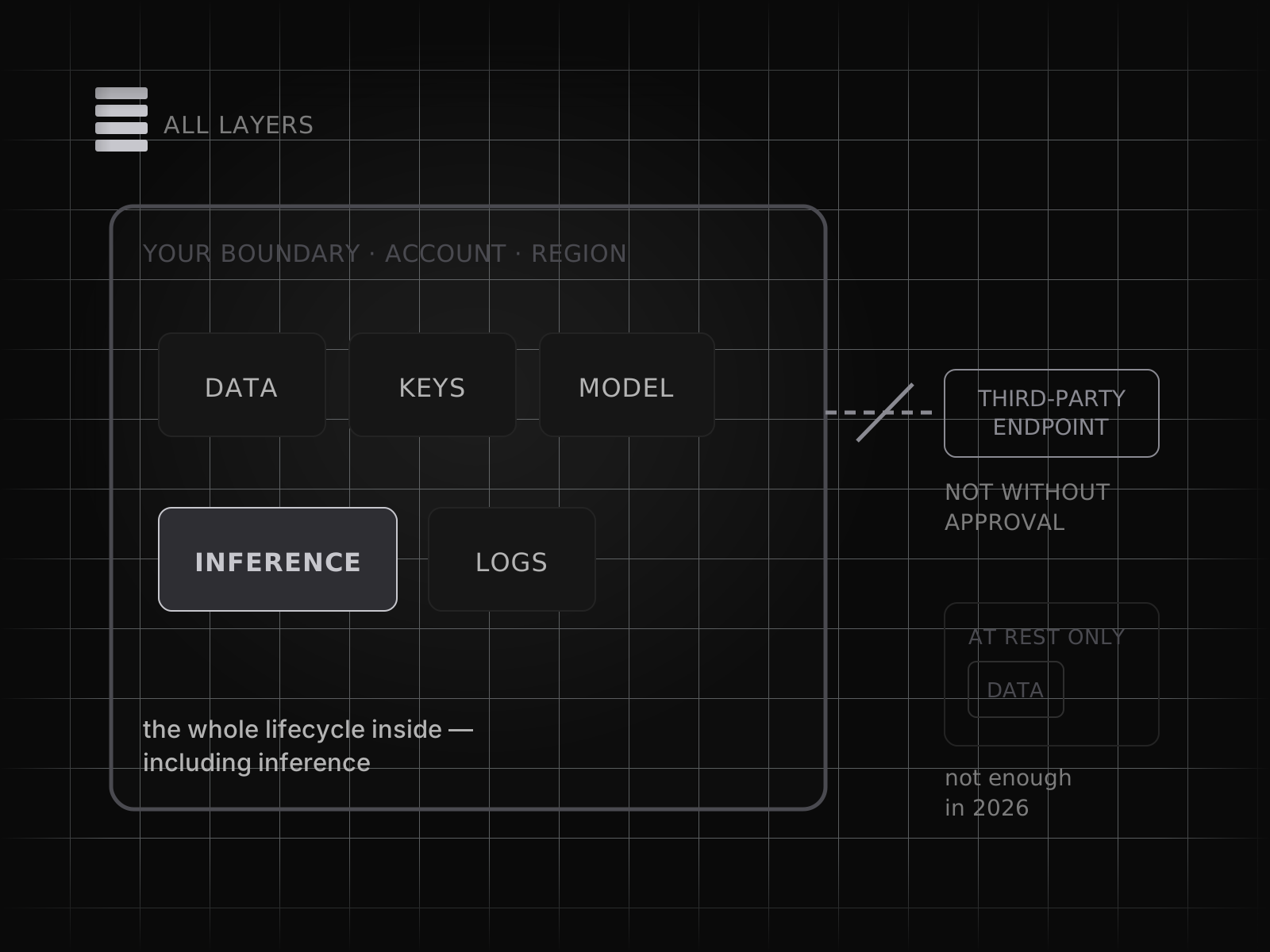
Where a regulator or a contract requires it, the model runs inside your boundary — your account, your region, your keys — at inference time and not only at rest, so residency covers what the system does and not merely where the data sits.
- 11
Telemetry you can take with you
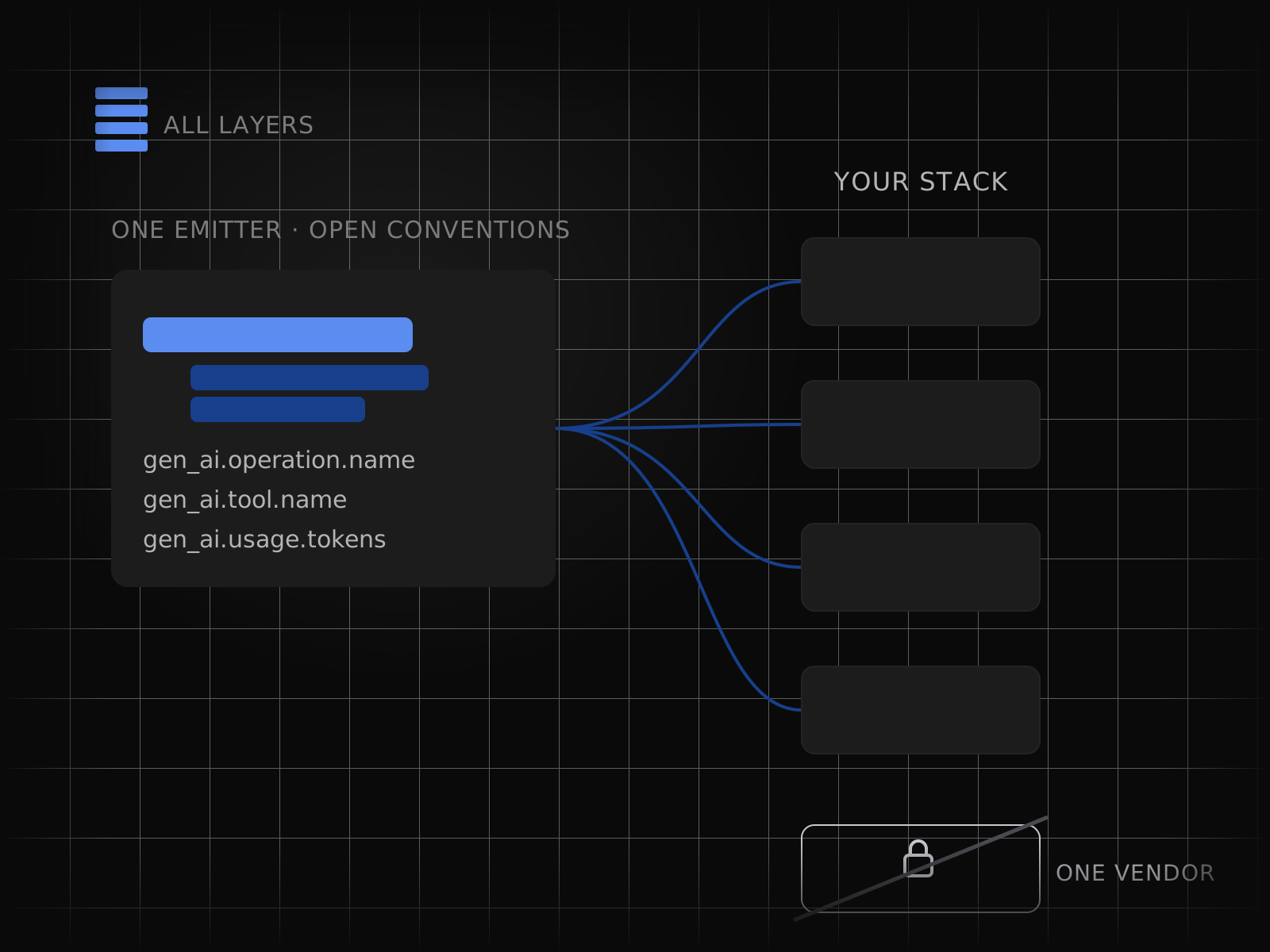
Traces follow the OpenTelemetry conventions for generative AI, so spans, tool calls, and evaluation results land in the observability stack you already run, and monitoring does not depend on us still being here.
- 12
Agent threats modelled separately
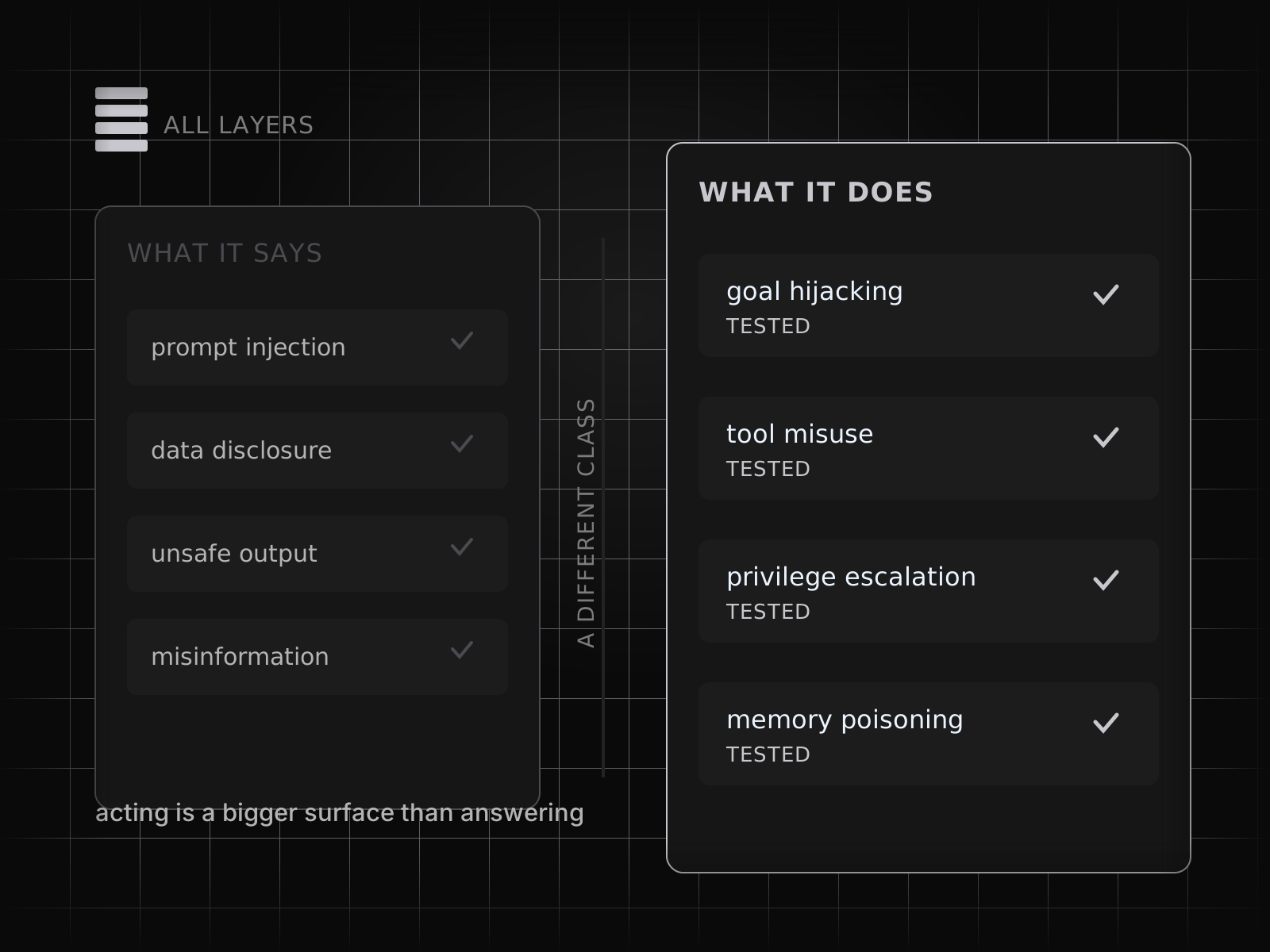
An agent that can act is a different risk surface from a model that can only answer. Goal hijacking, tool misuse, privilege escalation, and memory poisoning are threat-modelled and tested as their own class, alongside the input and output defences at the boundary.
At a glance
Every capability, at a glance
12 figures, one per capability. Open any to read it in full.
How it runs
From first call to running unattended
Every engagement runs the same five steps, whatever the service.
- 01
Map the process
We sit with the people who do the work today and write down every step, exception and hand-off before anything is built.
- 02
Build against a golden set
A held-out set of real cases, agreed with you, is the bar each build has to clear before it goes anywhere near production.
- 03
Run beside the team
The system runs in parallel with the team for as long as it takes, and every disagreement between them is reviewed together.
- 04
Hand over the keys
The code, the prompts, the evaluation set and the runbooks are handed over in your accounts, under your keys.
- 05
Keep it running
We watch the runs, retrain and repair as the inputs drift, or train your own team to do the same.
Outcomes
What this looks like when it lands.
01 How a logistics operator cut forecast error by a third
Replacing a spreadsheet model with a versioned pipeline and weekly retraining reduced demand-forecast error enough to take a full day of safety stock out of the network.
02 An analyst assistant that paid back in one quarter
Supremacy grounded an internal assistant in the company’s own warehouse and runbooks, turning hours of SQL and dashboard hunting into a question-and-answer flow the analytics team now relies on daily.
03 Catching model drift before customers did
Live evaluation and alerting flagged a silent accuracy drop in a credit-risk model the week it began, letting the team retrain and redeploy before a single bad decision reached production.




Details
On the spec sheet.
- Service
- Artificial Intelligence
- Group
- Models & intelligence
- Capabilities
- 12
- Engagement
- Map, build, run beside the team, hand over, keep running
- Ownership
- Your accounts, your keys, your region
FAQs
Asked before signing.
What does Supremacy AI Engineering actually cover?
The full applied stack — data pipelines, model selection and fine-tuning, retrieval, agent orchestration, evaluation, guardrails, and the integrations that put the output inside the workflow where the decision gets made.
Do you use frontier APIs or open-weight models?
Both, chosen per workload. Frontier APIs from Anthropic, OpenAI, and Google where reasoning quality carries the task; open-weight models served on vLLM where cost, latency, or data residency decides it. We benchmark the choice on your data before committing to it.
How do you handle our data security?
Your data stays in your environment by default. We work inside your cloud accounts, use customer-managed keys, scope access by role, and route nothing to a third-party provider without explicit approval.
How do we know the system is actually working?
Every build ships with an evaluation harness tied to the metric you are trying to move, plus live tracing on every call, so accuracy, cost, and latency are reported continuously rather than estimated at the end of a quarter.
Where should we start?
Usually one workflow with a cost you can already name — a queue somebody is clearing by hand, a document set nobody can search, a decision that waits on an analyst. We instrument it, automate it, and use what that teaches us to scope the next one.